


Table of Contents
ToggleThe Most Common Causes of Warm Air from Your AC
1. Thermostat Issues: The Simple Fix That’s Often Overlooked
Before diving into complex mechanical problems, start with your thermostat. Many homeowners discover their AC is blowing warm air simply because:- The thermostat is set to “heat” instead of “cool”
- The fan setting is on “ON” rather than “AUTO,” causing the blower to run continuously even when the cooling cycle isn’t active
- The temperature setting is higher than the current room temperature
- Dead batteries in programmable thermostats are causing erratic behavior
2. Dirty Air Filter: The Silent Performance Killer
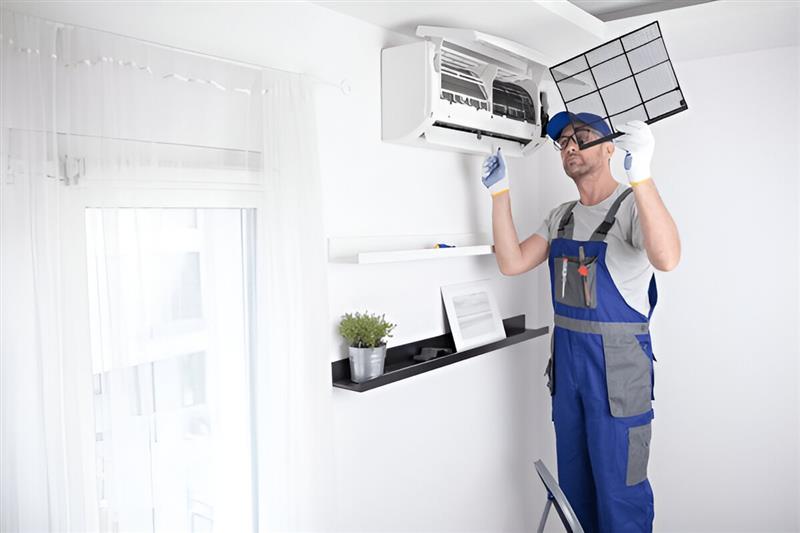
A clogged air filter is one of the most frequent culprits behind AC performance problems. When your filter becomes saturated with dust, pet hair, and debris, it restricts airflow to your system. This restriction causes:- Reduced cooling efficiency
- Ice formation on evaporator coils
- System overheating and potential shutdowns
- Warm air circulation as the system struggles to function properly
3. Refrigerant Leaks: When Your AC Loses Its Cooling Power
Refrigerant is the lifeblood of your air conditioning system. When refrigerant levels drop due to leaks, your AC cannot absorb heat effectively from your home’s air. Signs of refrigerant issues include:- Warm air from vents
- Ice buildup on refrigerant lines
- Hissing sounds from the unit
- Higher than normal energy bills
4. Frozen Evaporator Coils: When Ice Stops the Cool
Ironically, ice formation on your AC’s evaporator coils will cause your system to blow warm air. This typically happens due to:- Restricted airflow from dirty filters or blocked vents
- Low refrigerant levels
- Dirty evaporator coils
- Malfunctioning blower motors
5. Electrical and Mechanical Failures
Several electrical components can fail and cause warm air issues:- Compressor problems: The compressor is responsible for circulating refrigerant. When it fails, cooling stops entirely.
- Faulty capacitors: These components help start and run motors. Failed capacitors can prevent the compressor or fan motors from operating.
- Damaged ductwork: Leaks in your ductwork can allow cool air to escape before reaching your living spaces.
- Dirty condenser coils: Located in your outdoor unit, these coils release heat. When dirty, they cannot function efficiently.
When to Call for Professional AC Service in Clearwater
While some issues like thermostat settings and air filter changes are DIY-friendly, many problems require professional expertise. Contact a qualified AC repair service when you encounter:- Refrigerant-related issues
- Electrical component failures
- Frozen coils that refreeze after thawing
- Unusual sounds or smells from your system
- Persistent problems after basic troubleshooting
Immediate Steps to Take When Your AC Blows Warm Air
- Check and adjust thermostat settings
- Inspect and replace the air filter if dirty
- Ensure all vents are open and unobstructed
- Turn off the system for 30 minutes if you suspect frozen coils
- Check your circuit breaker for tripped switches
The Importance of Regular AC Maintenance in Clearwater’s Climate
Clearwater’s hot, humid climate puts significant stress on air conditioning systems. Regular maintenance can prevent many issues that cause warm air problems:- Spring tune-ups before peak cooling season
- Regular filter changes to maintain proper airflow
- Professional cleaning of coils and components
- Refrigerant level checks to ensure optimal performance
- Electrical component inspections to catch problems early
Why Choose Professional AC Repair Services?
Professional HVAC technicians bring several advantages to diagnosing and fixing warm air issues:- Proper diagnostic tools to identify root causes quickly
- EPA certification for safe refrigerant handling
- Warranty protection on repairs and parts
- Safety expertise for electrical and mechanical work
- Long-term solutions rather than temporary fixes
Energy Efficiency and Cost Considerations
When your AC blows warm air, it often works harder while cooling less effectively, leading to:- Higher energy bills
- Increased wear on system components
- Potential for more expensive future repairs
- Reduced system lifespan
Preventing Future Warm Air Issues
Take these proactive steps to minimize the risk of your AC blowing warm air:- Schedule annual professional maintenance
- Change filters regularly
- Keep outdoor units clean and unobstructed
- Address small problems before they become major issues
- Monitor your system’s performance for changes
Conclusion: Don’t Suffer in the Heat
When your air conditioner starts blowing warm air, quick action can mean the difference between a simple fix and a major repair. While some issues have straightforward solutions, others require the expertise of professional AC repair technicians who understand the unique challenges of Clearwater’s climate.Remember that your comfort and your AC system’s longevity depend on proper maintenance and timely repairs. If you’re experiencing persistent warm air issues or want to schedule preventive maintenance, don’t hesitate to contact qualified AC service professionals in your area.Ready to restore your home’s comfort? Professional HVAC Service Clearwater can diagnose and resolve warm air issues quickly, ensuring your system operates efficiently throughout Florida’s demanding cooling season.Frequently Asked Questions
This could be due to incorrect thermostat settings, dead batteries, or a malfunctioning unit. Always check if it’s set to “cool” and “auto,” and replace batteries if needed.
Yes. A clogged air filter restricts airflow, leading to reduced cooling, frozen coils, and system overheating—all of which can result in warm air blowing from vents.
Signs of a refrigerant leak include warm air from vents, ice buildup on refrigerant lines, hissing noises, and unusually high energy bills. Call a licensed AC repair technician in Clearwater for diagnosis.
Turn off your system for 30 minutes, replace the air filter, and check for airflow issues. If coils refreeze or airflow seems restricted, professional service is needed.
Contact a pro if you notice refrigerant leaks, frozen coils, electrical issues, strange smells, or persistent warm air after basic troubleshooting.